
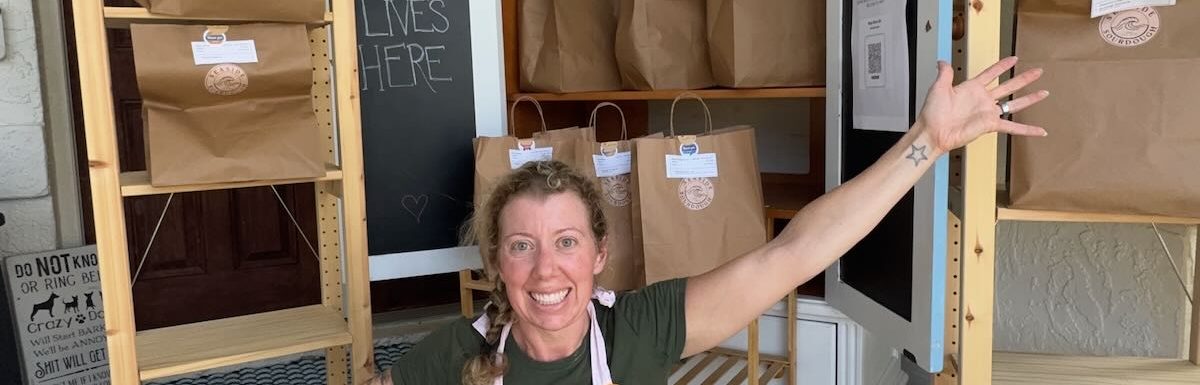
This past week, someone reached out hoping to order sourdough bread for that very same day.
It was a perfectly reasonable question. If you are used to walking into a grocery store or bakery and finding bread waiting on a shelf, it probably seems like I should be able to wander into my kitchen, mix up some dough, pop it into the oven, and hand you a loaf a few hours later.
Unfortunately, sourdough has never cared about anyone’s dinner plans.
Unlike bread made with commercial yeast, sourdough depends on a living starter. Mine is named Betty White, because she is beloved, surprisingly resilient, and deserves to be treated with respect.
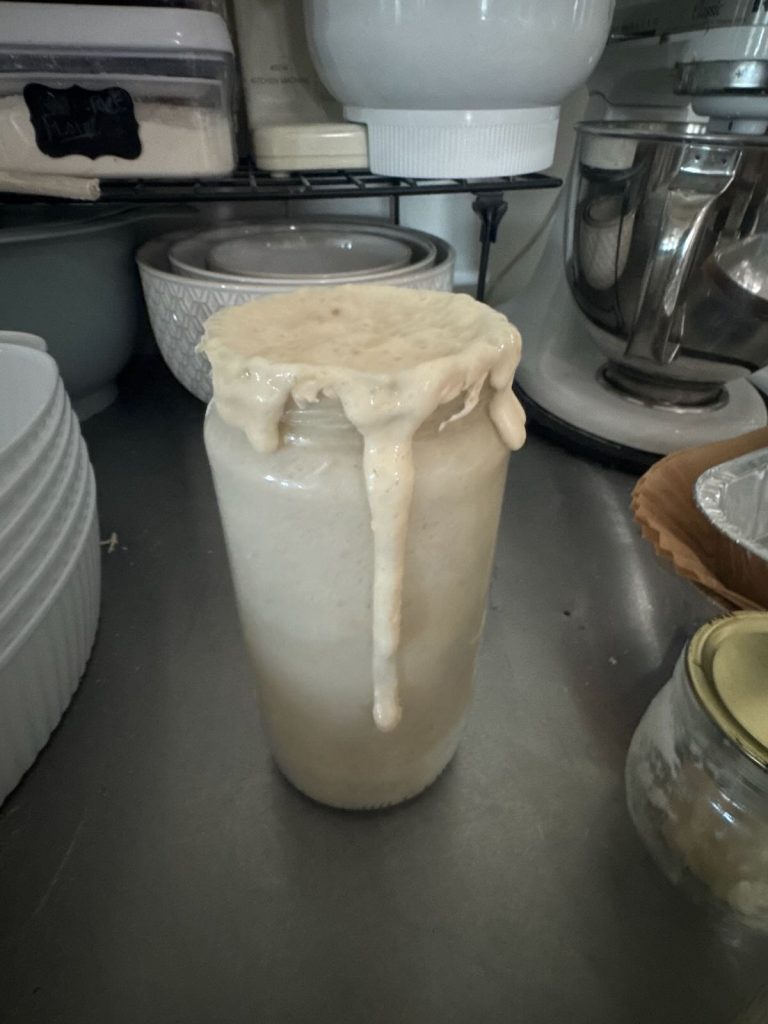
It Starts With Betty White
I try to feed Betty White every day, but a strong feeding can sometimes keep her active and ready for a couple of days. Before I can make bread, I need enough healthy, bubbly starter to raise the dough.
I can give her a quicker feeding using equal parts starter, flour, and water. That helps her become active faster when I am in a time crunch, but constantly asking her to work on an accelerated schedule is not how I want to maintain her long term.
She is a living culture, not an employee I can threaten with a performance review.
The health of my starter affects every loaf that comes out of my oven. If Betty is not ready, the bread is not ready.
Then the Dough Needs Time
Once the starter is active, I mix the dough and let it ferment for several hours.
This is not idle time. Fermentation is when the starter is doing the work that gives sourdough its rise, structure, flavor, and character. The exact timing can change depending on the temperature in my kitchen, the strength of the starter, the kind of loaf I am making, and apparently whatever mood the dough woke up in that day.
Sourdough is less like following a timer and more like watching for signs that the dough is actually ready.
After the first fermentation, I shape each loaf. Then it goes into the refrigerator for a cold proof, usually for several more hours.
Some loaves can stay there overnight. My sandwich loaves tend to do beautifully with an overnight cold proof. My round boules are a little more dramatic. They can overproof in their bannetons if I leave them overnight, so I often shape, proof, and bake those on the same day.
Every shape has its own personality because apparently one Betty White was not enough for this household.
Baking Is Still Not the Final Step
Each loaf bakes at 425 degrees for about 40 to 45 minutes.
For my round loaves, that usually means approximately 20 minutes with the lid on, followed by another 20 to 25 minutes with the lid off so the crust can finish baking and develop that beautiful golden color.
When the loaf comes out of the oven, it smells incredible. It crackles. It looks ready. Every instinct tells you to cut into it immediately and cover it in butter.
Please resist.
The inside of the loaf is still finishing as it cools. Cutting it too soon can leave the center gummy and affect the texture of the entire loaf. I cool my bread for at least two hours before slicing it, but four to five hours is even better.
That cooling time is part of the process too, even if it feels mildly cruel.
So, How Quickly Can I Make a Loaf?
Under the absolute best circumstances, with a healthy starter ready to go and every part of the day cooperating, I could potentially make a loaf in about eight hours.
That would still be a warm, unsliced loaf handed over at the end of the day. It would require me to rearrange my schedule, rush parts of the process, and hope the dough agreed with my plans.
Most sourdough loaves need more time than that. Some begin the day before they are baked. Others begin with starter preparation even earlier.
So when you pick up a loaf on Friday, its story did not begin Friday afternoon. I have already fed the starter, mixed the dough, watched it ferment, shaped it, proofed it, baked it, and given it enough time to cool properly before it reaches you.
That time is part of what you are buying.
How to Make Sure You Get Bread
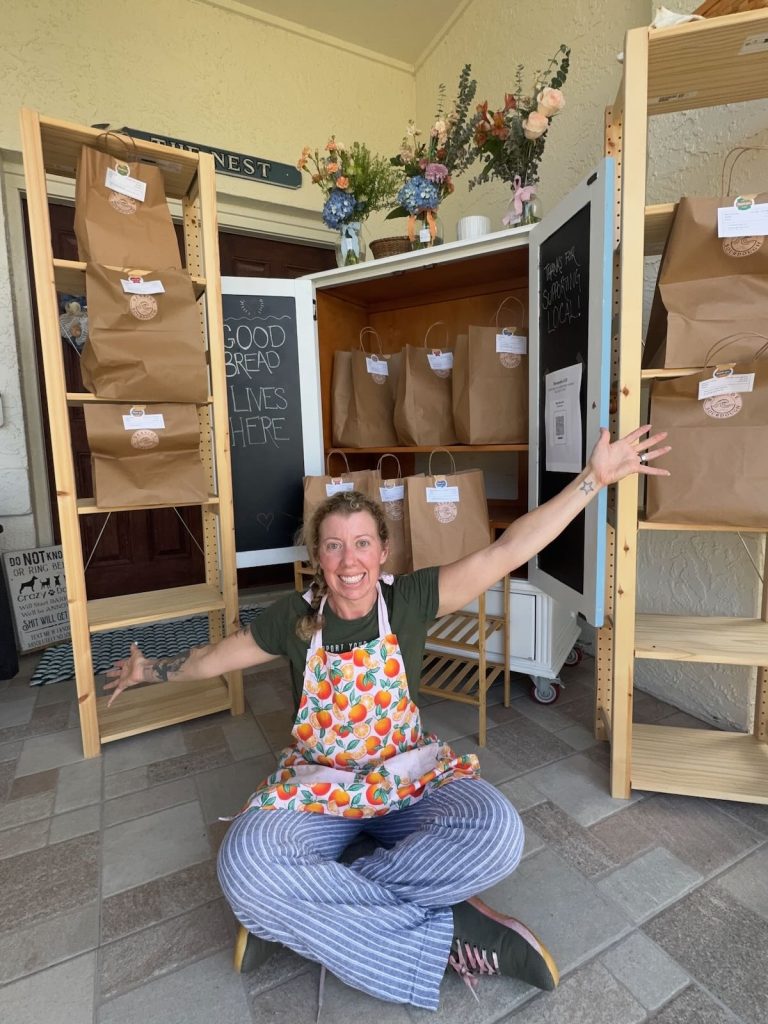
The best way to guarantee your bread is to preorder through my weekly Hotplate drop. Preorders allow me to plan how much starter to prepare and how many loaves I can realistically make without sacrificing quality or becoming the neighborhood woman openly arguing with dough in her kitchen.
I am also considering keeping a few extra loaves available for porch farmstand pickup. Those would be available on a first come, first served basis when I have the time and oven space to make them.
Think of preorders as the guarantee. Extras are the fun little neighborhood bread lottery.
You can subscribe to Seaside Sourdough text notifications at Hotplate to hear when ordering opens and when occasional extras are available.
Because while I cannot always make you sourdough today, I would be very happy to make sure you have ridiculously good bread waiting for you later this week.